For a company, participation in an international trade show is one of the most strategic investments of the year. Yet, too often the focus is solely on the logistical and dimensional aspects.
The real quantum leap occurs when you stop thinking of the booth as a mere “structure” and start designing it as a real communication tool, capable of instantly transferring brand values and positioning.
In a crowded pavilion, buyers’ attention is limited. How do you ensure that your space does not come across as “anonymous” or, worse, confusing? Here are the design levers to act on.
How to turn the booth
into a real communication tool
Visual Architecture and Color Blocking
The first battle is won in the corridor. The goal is not just to be seen, but to be chosen. To catch the eye dozens of feet away, aesthetics must serve functionality.
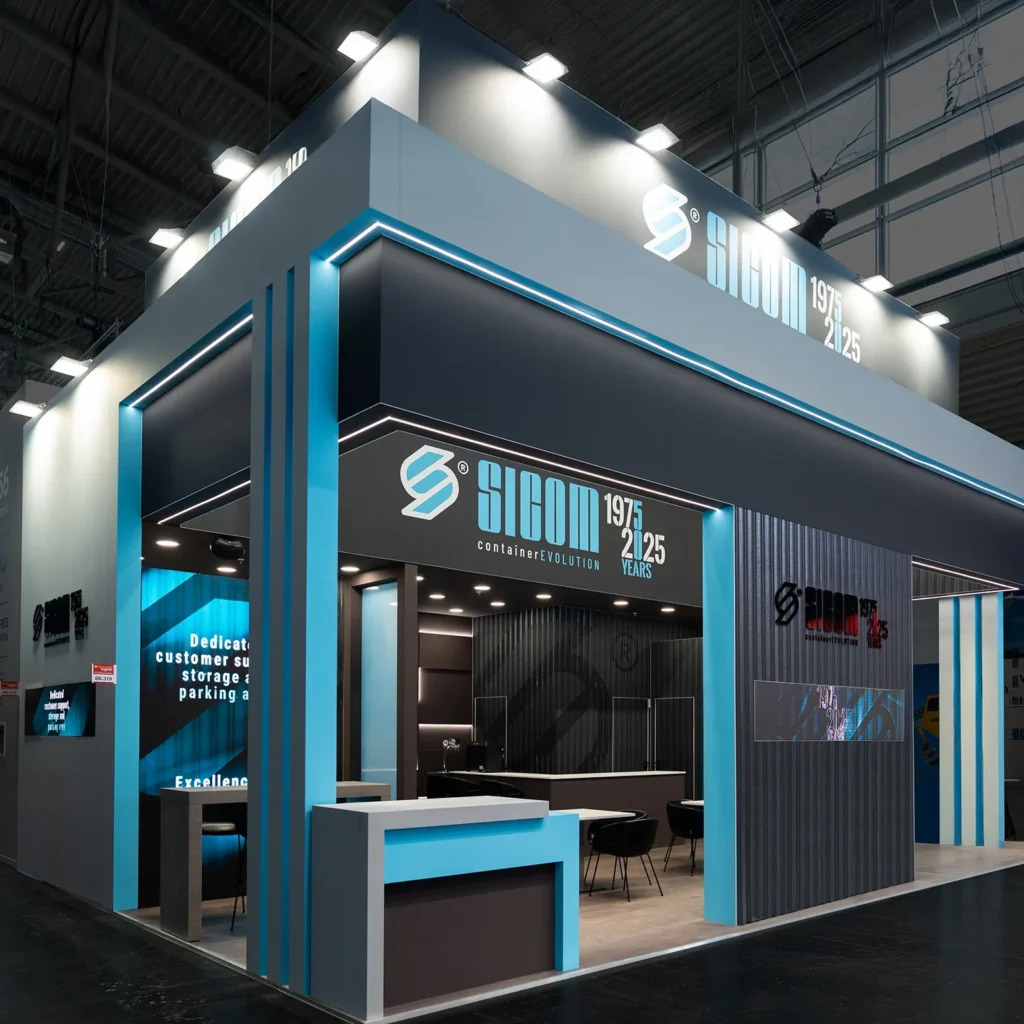
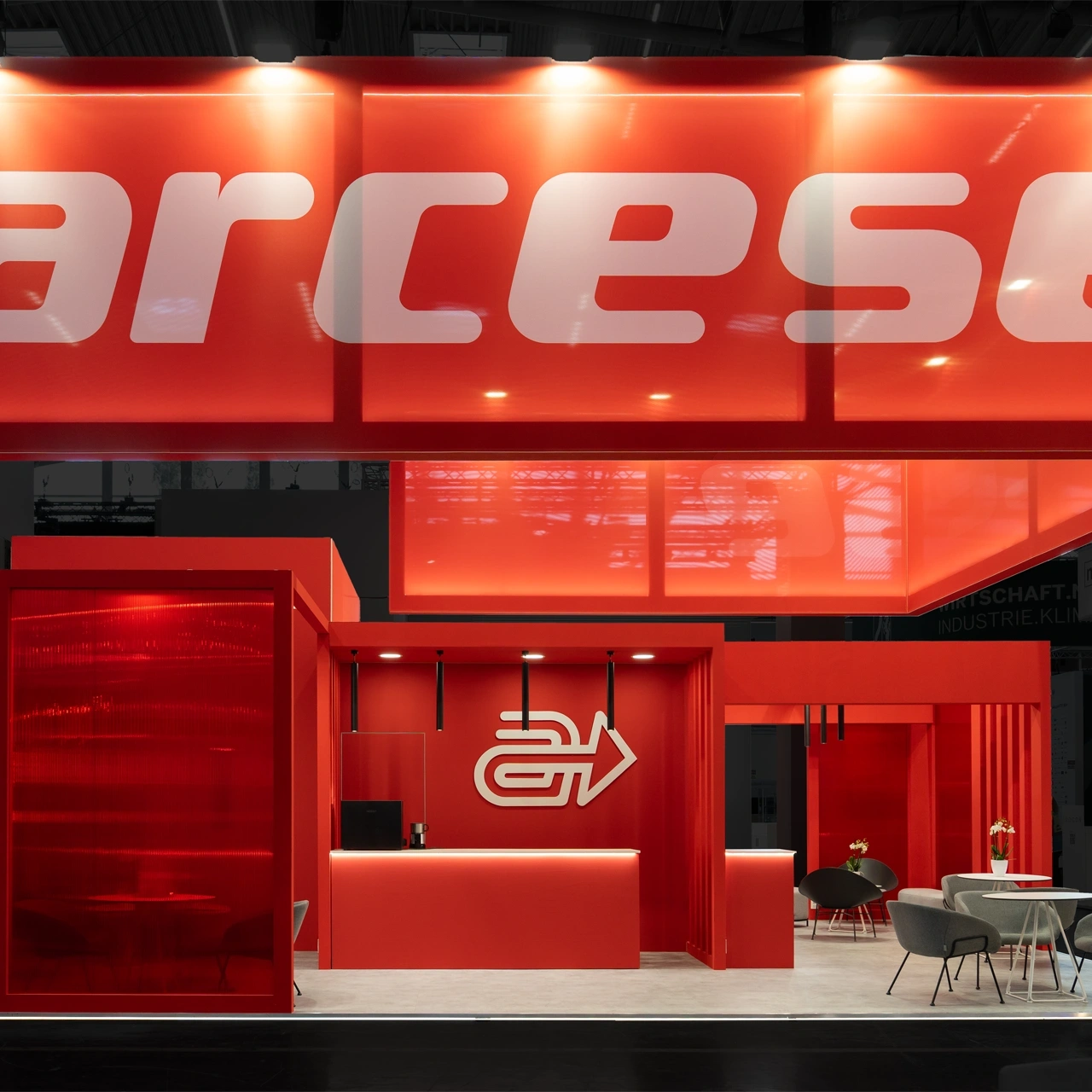
Geometries and Color Blocking: The use of sharp contrasts and solid color fields dramatically increases the visibility of the booth.
Practical case: In the project created for SICOM, we used these very levers to create a clear visual architecture that framed the space. In addition, to immediately communicate their core business, we introduced a high-quality graphic texture inspired by corrugated container sheet metal.
Readable branding: avoiding the trap of "beautiful but dumb booth"
A custom-designed space for an individual brand, with maximum architectural and narrative freedom.
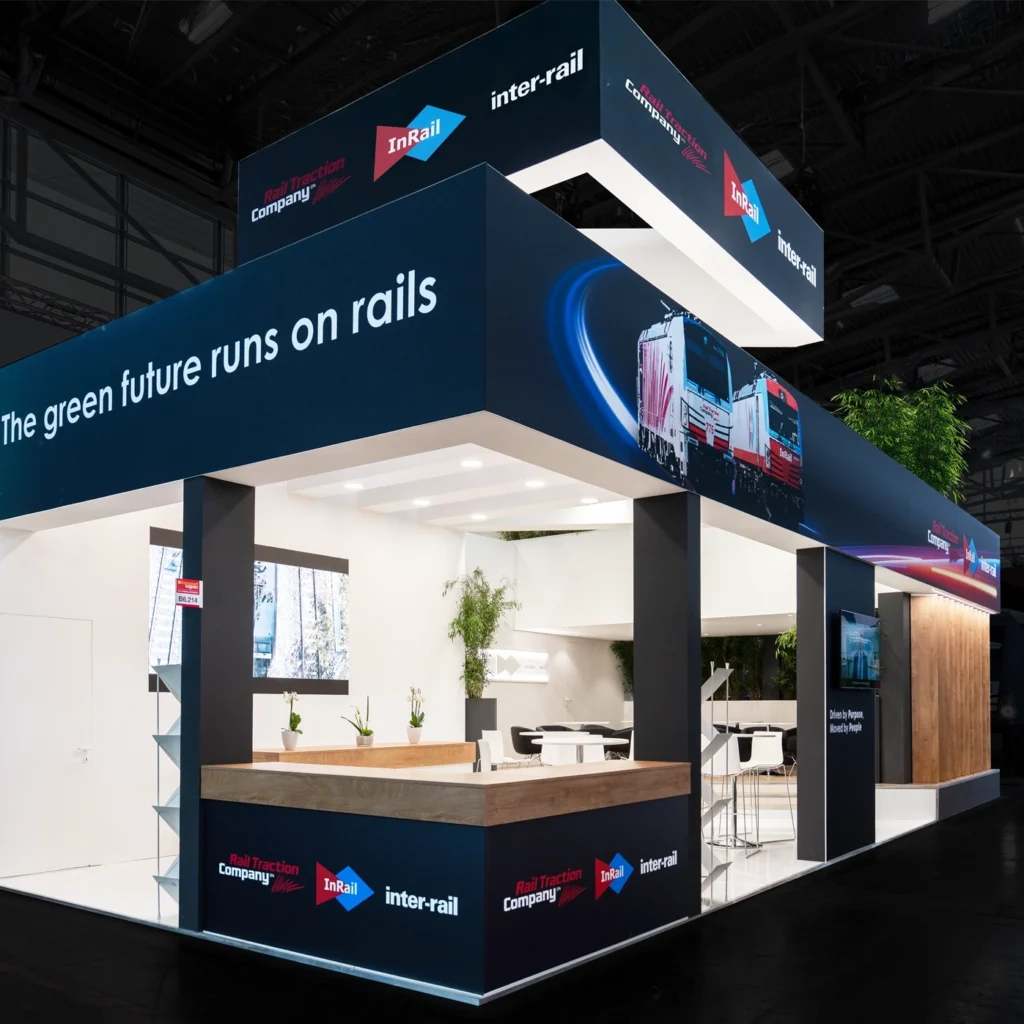
Strategic positioning: Corporate logos and graphics should be placed on key elements such as fascias and totems so as to ensure readability from multiple angles. The visual identity must remain clear and consistent.
Layout as a conversion pathway
An aesthetically impeccable booth serves little purpose if it is not conducive to business. Space organization, even when working on constrained square footage, must be designed to maximize business usability.
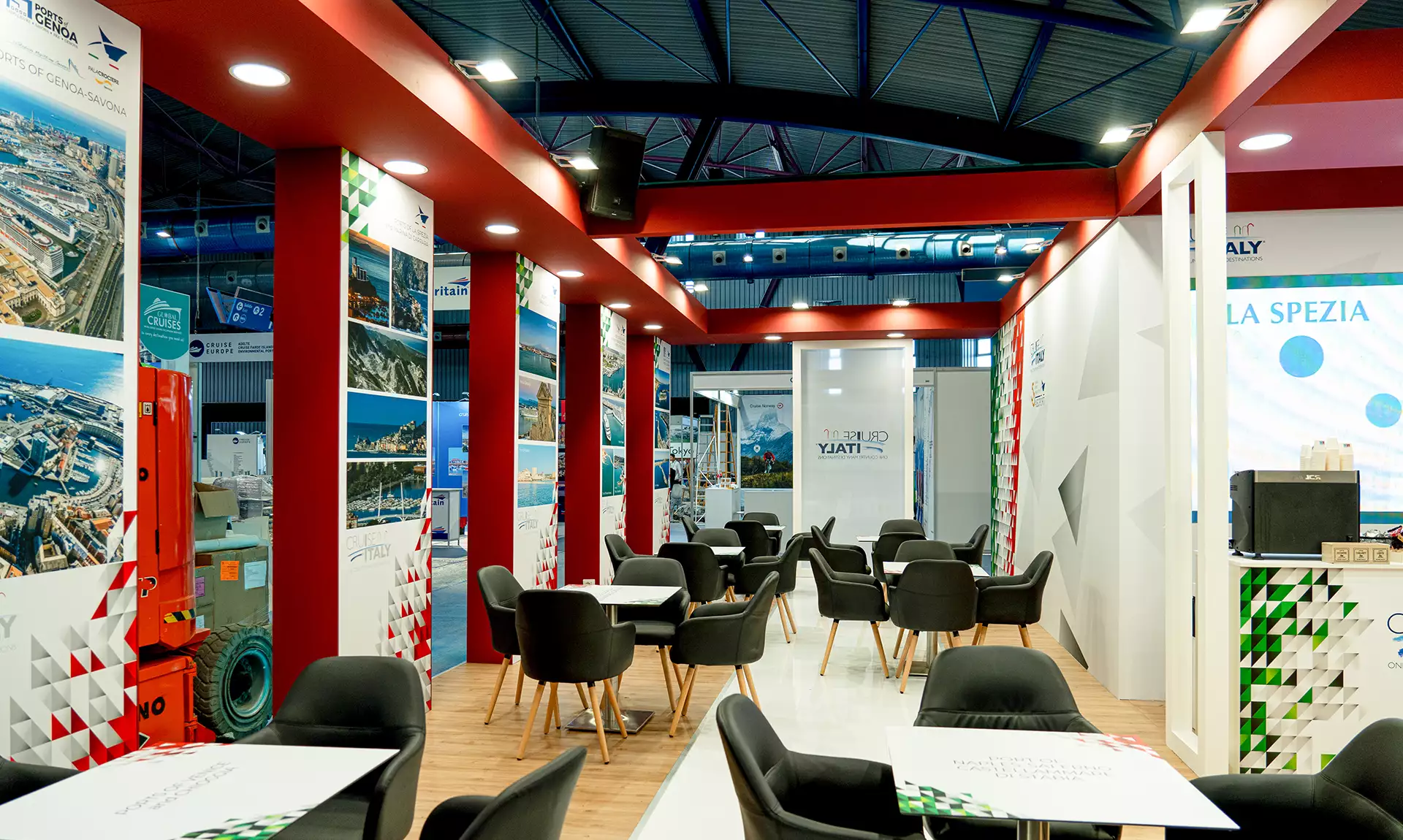
Reception and Meeting Area: Need clear entrance areas to skim contacts and comfortable B2B areas for negotiations.
Practical cases: Intelligent flow management is vital. We demonstrated this in the projects we curated for Seatrade Global in Miami and for the collectives at Transport Logistic in Munich, where we organized significant square footage ensuring smooth meeting areas and B2B routes, without ever penalizing the visibility of individual entities.
The 3 mistakes not to make
The "Red Flags" of Design
Avoiding budget waste means being able to recognize common pitfalls. Here’s what to monitor
during the planning stage:
"Beautiful but dumb": The space attracts attention but does not communicate brand identity.
Hidden Branding: Logos that are too low or only on the front make the stand invisible from the side aisles.
Closed layout: Obstructs first contact and intimidates potential leads.
Attention (an aspect to be evaluated well):
If you decide to start with a pre-fitted model, don’t limit yourself to the bare minimum; even a pre-fitted space can communicate and maintain a recognizable brand line.
Before moving to the implementation phase, every company should be clear about these priorities.
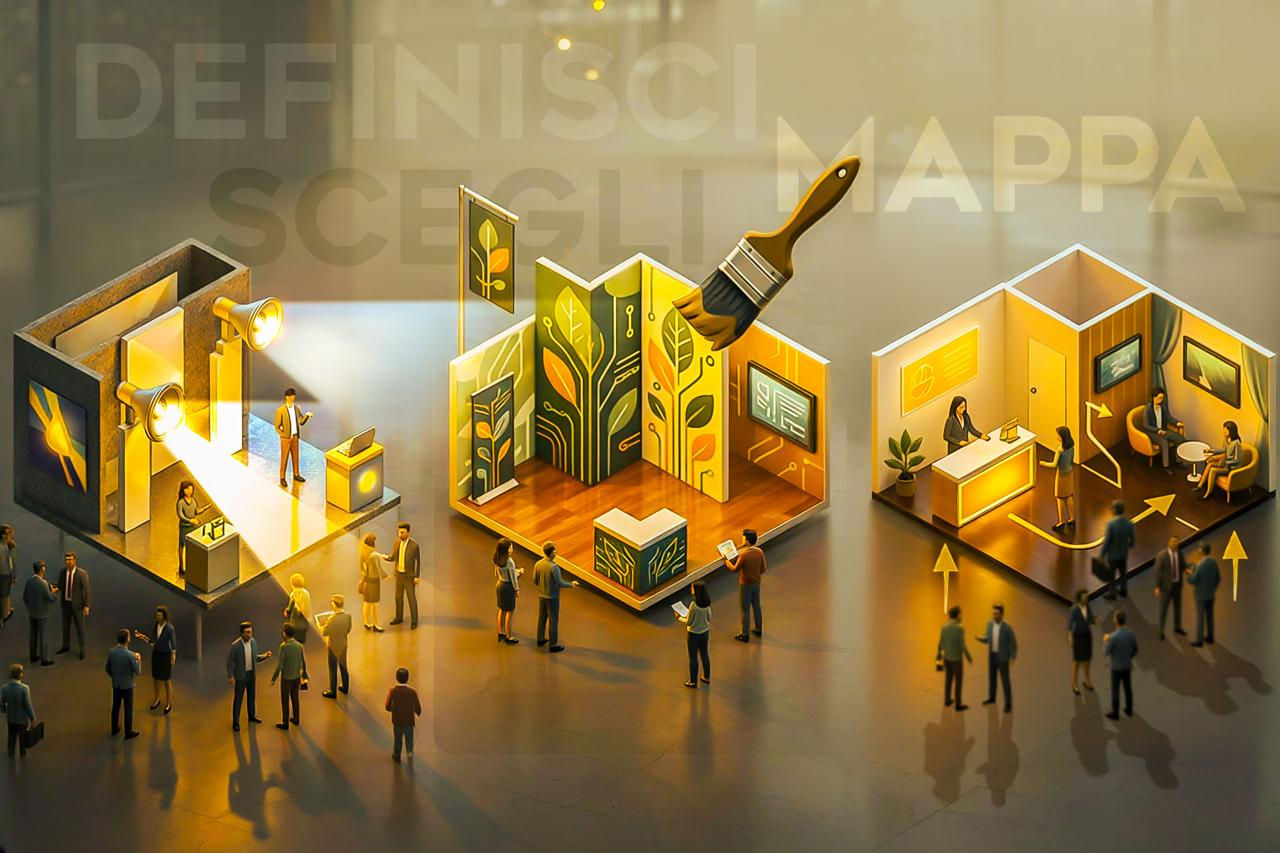
Define visibility levers: Plan sharp contrasts to be seen from the very back of the hall.
Choose your identity texture: Identify a graphic element that echoes your core business.
Map the lead's journey: Design separate zones for quick reception and confidential negotiations.
CONCLUSION
an approach that scales
These principles of visual and spatial communication do not only apply to mega-stands built from scratch.
Transferring the key elements of your concept is possible and necessary even when using pre-fitted solutions. The real challenge, as we did for SICOM by moving from the custom project in Munich to the pre-fitted one in Verona, is to maintain maximum brand consistency regardless of structural constraints.
The important thing is to rely on a design method that puts the company’s identity at the center, turning every square meter into an effective marketing touchpoint.
Want to turn your next booth into a strategic marketing asset?
Don’t let your investment go unnoticed.
Contact Graphis Studio for a design consultation and learn how we can translate your brand identity into a high-impact communication space.